
In today’s digital world, the first impression of your financial brand makes online matters more than ever. For many potential customers, your landing page may be their very first interaction with your company. That’s why having a polished, professional financial services landing page is crucial for making the right first impression and converting visitors into leads and customers.
But what exactly is a financial services landing page, and what makes one effective?
Essentially, it’s a targeted web page meant to prompt visitors to take a specific action, like requesting a quote, signing up for a demo, or contacting your business. It speaks directly to your ideal customer and focuses on quickly communicating your brand’s offerings, credibility, and value proposition.
An effective financial landing page is so much more than just your website’s generic homepage. It has a singular focus and clear purpose of generating conversions, whereas a homepage needs to cover all the basics about sections, navigation, and information architecture. The landing page can dig into a specific offering, location, campaign, or customer segment.
In our previous article – we talked about the importance of having a landing page for fitness and gym instructors. In this article, we’ll explore best practices for creating a landing page that captures leads and makes the right impression. We’ll look at must-have elements to include, design tips, lead gen ideas, real-world examples, and things to avoid. With the strategies covered here, you can craft a financial landing page that showcases your brand and prompts visitors to engage further.

A financial services landing page is a specialized website page designed specifically to convert visitors into leads and customers for financial brands. It has a sharp focus on promoting one particular financial product, service, offer, location, or customer segment.
Unlike a general homepage which covers diverse topics, a dedicated landing page will drill down on a singular offering, campaign, or audience.
The goal is to quickly communicate to visitors why your financial brand can solve their needs and prompt them to take action, whether that’s requesting a quote, signing up for a demo, contacting your firm, or downloading content.
These pages play a crucial role in the lead generation process for banks, credit unions, investment firms, insurance providers, and other financial institutions. They speak directly to your target client demographics and should be optimized to convert site traffic.
An effective financial landing page will:
In summary, financial landing pages are laser-focused web pages designed specifically for prompting conversions and capturing leads. They allow you to highlight specific products, services, locations, campaigns, or customer profiles. When designed well, they can significantly boost lead generation and improve return on marketing investment.
Having a polished, professional landing page is extremely important for financial service providers for several key reasons:
In essence, your landing page is often a prospect’s first impression of your business. Ensuring it looks polished, communicates your value clearly, and converts visitors is critical for succeeding with digital marketing and lead generation in the financial space.
When building landing pages for the financial industry, there are a few common types and variations you may want to create:
The key is determining the primary intent and outcome you want from each page. Align the content, offers, and messaging to speak directly to that goal and audience. Test different variations to see what converts best. This strategic approach will drive more high quality leads.
When designing financial landing pages that convert, there are three particularly important elements to include.
First, have a strong, benefit-focused headline and subheadings. These should quickly grab attention and convey what makes your offering valuable. For example “Take Your Investments to the Next Level with Our Expertise” or “The Easiest Way to Consolidate High-Interest Debt”.
Next, include social proof like customer reviews, testimonials, case studies, or ratings and awards. Features like these build trust and credibility for financial brands. Be sure to prominently display and highlight them.
Finally, make calls-to-action highly visible and action-oriented. Strategically placed buttons inviting visitors to “Get Your Free Quote” or “Apply Now” encourage engagement. Make them brightly colored and contrast well with the other page elements.
Incorporating a compelling headline, social proof, and prominent CTAs into the design will give your financial landing pages greater stopping power and conversion potential for capturing leads. By bringing together these elements in a clean, uncluttered, and consistent design, you can craft landing pages that effectively attract, engage, and convert financial services prospects.
When designing and optimizing financial landing pages, there are some best practices to follow:
By keeping these tips in mind during the design process, you can optimize your financial landing pages for more effective lead capture and conversions.
There are a few key marketing strategies that work extremely well for driving qualified traffic and leads to a financial services landing page.
First, focus on search engine optimization. Conduct keyword research to identify what prospective customers are searching for related to your offerings. Then optimize your landing page content, title tags, meta descriptions, image alt text, etc. to rank highly for those searches. Improving your search visibility and rankings will allow you to capture relevant organic traffic from search engines.
Next, leverage social media promotions across platforms like Facebook, LinkedIn, and Twitter. Create social posts that grab attention and link directly to your landing page. Run paid social ads targeted to your buyer personas also leading to your page. Retarget people who have visited your website through social media ads.
Lastly, use pay-per-click advertising through platforms like Google Ads and Microsoft Ads. Research the right keywords and placements to show your ads to interested prospects. Drive traffic directly from PPC ads to your landing page. Continually optimize your ads and landing page experience to improve conversion rates.
Focusing marketing efforts on these three areas – SEO, social media promotions, and PPC advertising – can deliver high quality leads to your landing pages on an ongoing basis.
It can be helpful to look at real-world examples of effective financial services landing pages to get ideas and inspiration for your own designs. Here are a few great examples:
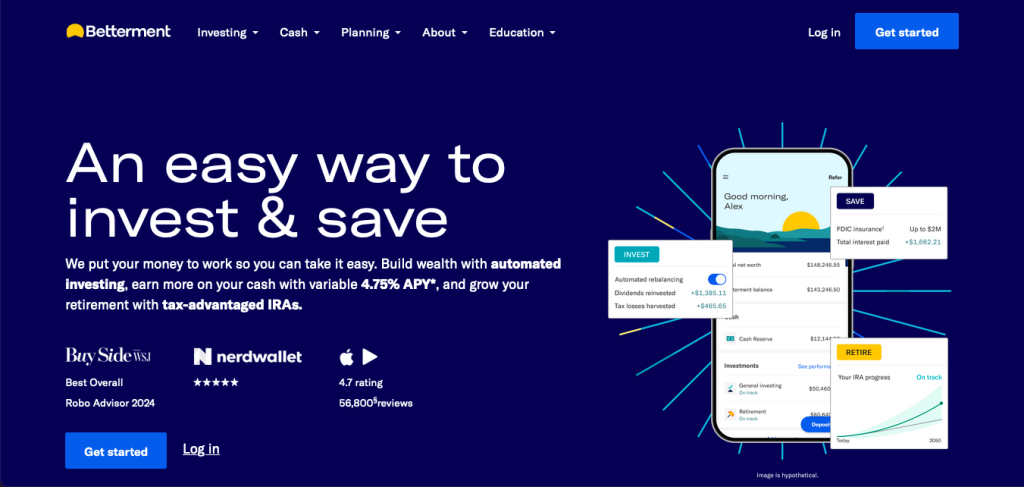
Betterment – This robo-advisor creates simple, benefit-focused pages like “Reach Your Money Goals Faster” for retirement planning. The page uses large graphics, minimal text, and clear CTAs to capture investor attention.
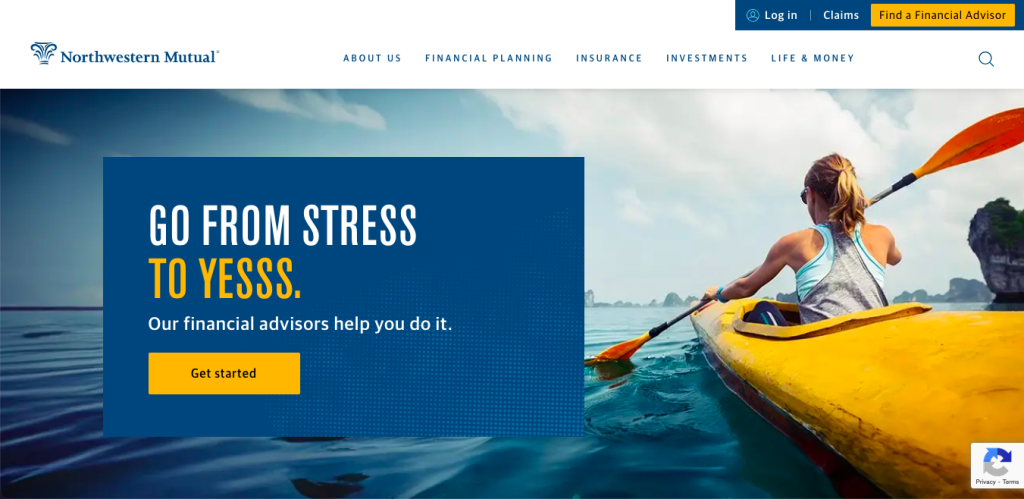
Capital One – Offers financial planning ,insurance and investments. They also use bold colors, clear FAQ section, and prominent “Get Started” buttons that enable instant online applications.

Schwab – This investment firm creates tailored landing pages focused on specific client types like entrepreneurs. The pages speak directly to that audience with relevant messaging and imagery.
Studying examples like these can provide ideas for creating your own landing pages that align with financial industry best practices while expressing your unique brand voice.
Rather than starting from a blank page, finding the right template can give your financial landing page a professional look and feel much faster. A pre-made template provides an established layout, structure, and design that you can then customize to match your specific brand.
There are a variety of options for sourcing templates. Browsing popular theme marketplaces like TemplateMonster and ThemeForest allows you to view many different templates purpose-built for the finance space. Website builders like WordPress and Squarespace also have template libraries to choose from.
Hiring a designer on freelance sites like Upwork or Fiverr is another option for getting a custom template made specifically for your company. You can also check template sections on stock image sites like Adobe Stock.
Finally, look at what competitors and industry leaders are doing for inspiration on elements and layouts that work well.
When reviewing financial landing page templates, check that they follow best practices like clear calls-to-action, ample white space, and mobile responsiveness. Look for ways to highlight social proof built in. Once you’ve selected the right template, you can tailor it by adding your own messaging, images, videos, logos, and color schemes. Using a premade template as a starting point allows you to quickly build a professional, effective landing page that represents your unique financial brand.
When crafting financial landing pages, there are a few additional things brands should keep in mind. First, ensure that your page is mobile responsive so it provides a seamless experience for smartphone and tablet visitors. This optimizes engagement and conversions across devices.
Also consider accessibility features to accommodate all users, like alt text for images, color contrast, and navigation that works with screen readers. For firms that serve multiple languages or geographic regions, provide translated versions of your landing page in different languages.
Integrate your landing page with marketing automation and CRM platforms to enable seamless lead nurturing after capture. Use A/B testing to experiment with different page versions and optimize based on performance data.
Consider security and compliance factors as well. Provide visible indicators of SSL certificates, encryption, and adherence to regulations like GDPR to build trust.
Lastly, don’t forget site search optimization. Use keywords in page titles, metadata, URLs, content, and HTML to help prospects find the right landing page. Keeping these additional factors in mind will maximize the effectiveness of your financial services landing pages.

Some common questions financial brands have about creating landing pages include:
Considering compliance requirements, establishing trust, and speaking to specific segments through your content and design are key for financial landing pages. Tracking performance will help refine the page.

In the digital age, your website landing pages have become the virtual front door for engaging prospects and winning new business. For financial institutions and service providers, making the right first impression online is now absolutely essential.
An effective landing page clearly communicates your offerings, establishes credibility, speaks to your target audience, prompts conversions, and reinforces your brand. It plays a pivotal role in guiding visitors through the sales funnel and capturing leads for further nurturing.
By following the tips covered in this guide, you can craft financial landing pages that align with industry best practices while expressing your unique value and brand voice. Take time to strategize your content, design, and messaging around specific services, locations, campaigns, and customer profiles.
Bring together key elements like attention-grabbing headlines, succinct copy, social proof, and clickable CTAs that motivate visitors to engage further. Promote your page through online marketing efforts focused on driving relevant traffic.
Then continually refine your landing pages using A/B testing and analytics. With an optimized, targeted landing page that represents your brand, you can make a stellar first impression online and generate more qualified leads. Use this guide as a resource when developing your next financial landing page.
Where Creativity Meets Simplicity - Customize with Ease! Forget about Coding and Enjoy Designing Your Website.