
Affiliate marketing has become one of the most popular online customer acquisition methods, and for good reason. By allowing partners (affiliates) to earn commissions for driving landing page traffic and sales, businesses can leverage entire armies of marketers promoting their products and services across the web. It’s extremely cost-efficient, as you only pay when an affiliate delivers an actual new customer.
And one of the most powerful ways to utilize affiliates is by having them drive highly targeted traffic to an optimized landing page. These often lead to email signups or purchases, allowing you to grow your customer lists and revenues exponentially.
But affiliate marketing, particularly when focused on landing page, does require some strategy and effort to work well. You need to understand what affiliate marketing is, pick the right affiliate models, create compelling landing page offers, avoid mistakes, and more.
In this article, I’ll provide a comprehensive blueprint on leveraging affiliates for your landing page advertising and strategy. Whether you’re new to affiliate marketing or looking to get more from your program, you’ll discover how to set up successful campaigns that acquire more customers for less money. I’ll share insider tips on partnering with affiliates, driving traffic, generating leads and sales, and scaling growth with this channel.
So if you’re ready to unleash a whole army of partners promoting your landing page across the internet for commissions, let’s dive in! Read on to become an affiliate marketing pro for your business.
Affiliate marketing is a business model where companies pay partners (affiliates) commissions for generating leads and sales on their behalf. As an affiliate, you place links or ads that direct traffic to a business’s site or landing page. If site visitors click those links and complete a target action, like making a purchase or filling out a lead form, you earn an agreed upon commission.
In essence, affiliates act as an extension of a business’s sales and marketing team. But instead of getting placed on payroll, affiliates drive the traffic, leads and sales independently in exchange for performance-based payouts. So the more customers an affiliate refers, the more money they can make.
Affiliate arrangements typically involve the business setting up an “affiliate program” where partners can apply to join. Once approved, these third-party partners are provided with special affiliate links to embed on websites, promote on their platforms, incorporate into ads, and more. Everything drives back to the company’s site. And cookies and tracking technology keep tabs on who sends what traffic to attribute referrals appropriately so affiliates get credit when their promos convert.
The beauty here is that costs scale directly in line with new revenue from affiliates. There are no upfront placement or spend requirements. You could sign up thousands of affiliates sending traffic, but if none of them convert customers, you don’t pay a dime out for those efforts. In essence you shift much of the customer acquisition costs to performance-based commissions, rather than less efficient advertising that eats into margins.
While affiliate marketing and referral marketing may sound similar on the surface, they have some distinct differences in how they work.
Referral marketing involves encouraging existing, happy customers to recommend your business to friends and contacts. Typically there is some small reward or incentive given to both the referring customer and the new customer that signs up. But there usually isn’t any major ongoing commission structure set up.
Affiliate marketing is more formalized and involves proactively recruiting partners through an affiliate program. Here, affiliates have strong financial incentives to keep driving new leads and customers over extended periods. So affiliates actively promote your business versus just referring to it occasionally.
The types of affiliates enlisted also tend to differ. Referral marketing taps into your customer base. Affiliate marketing leverages bloggers, social influencers, paid media partners and a breadth of other website owners. The scale and reach can be vastly bigger.
And the publisher model of affiliate marketing allows for very targeted, niche partnerships. Referral marketing casts a wider, less targeted net that may convert fewer customers.
When using a landing page and trying to drive traffic for lead generation or sales, affiliate marketing tends to convert better. The financial incentives ensure affiliates continually promote clicks to your pages. And hyper-targeted traffic aids conversion optimization efforts.
So as you consider driving traffic to your landing pages, affiliate marketing is likely the more powerful option compared to just referral marketing from existing customers. You want converted visitors, not just tepid referrals.
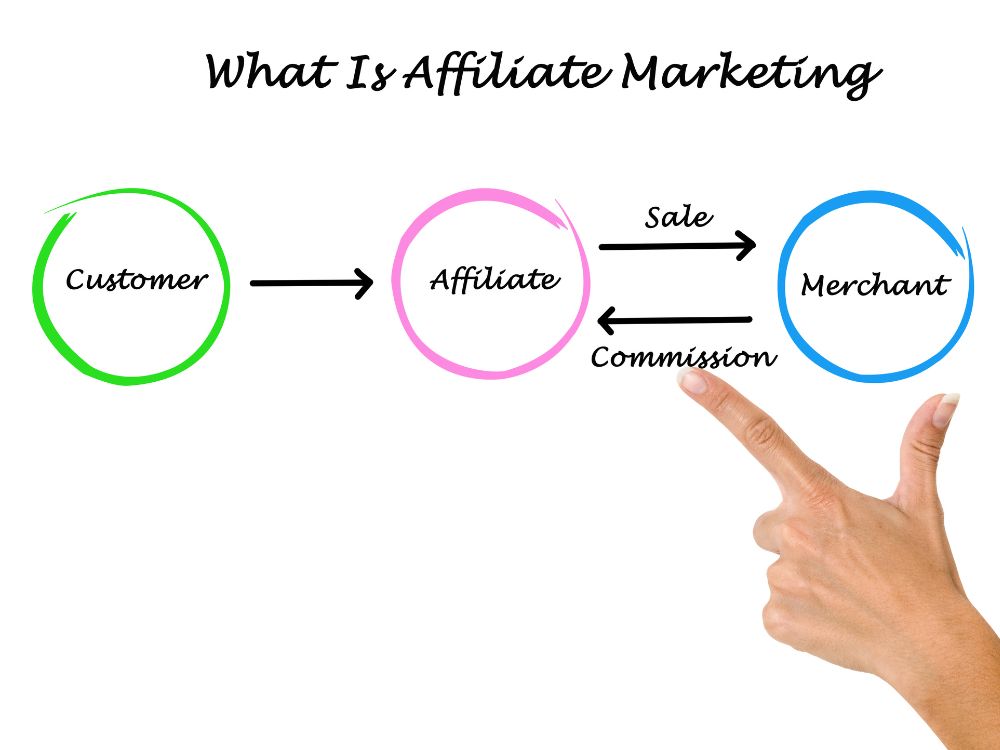
Leveraging affiliates to drive traffic to your landing pages can be extremely effective for lead generation and sales. The key is pairing affiliates who have hyper-targeted audiences with an optimized landing page that convert those visitors.
Some major benefits of using affiliate marketing for your landing page advertising include:
The best affiliate partnerships promote your landing pages to warm, targeted traffic who have a reasonably high propensity to convert once they hit the page. This factors into the landing page design itself.
Your pages need to appeal to referred visitors by speaking to their interests or needs that made them click over initially. Strong value propositions, appeal to authority, social proof, minimal steps to convert, and good branding all help. Optimization comes from continual testing of messaging, layouts, calls-to-action, and creatives.
And remember, not all affiliates perform equally, despite seeming suited on paper. Monitor conversion rates by affiliates closely, and prune ones not yielding conversions. Then double down on your top partners sending the most converted visitors.
When executed properly, affiliates can become the fuel to multiply your landing page conversions dramatically. You turn advertising into a purely performance model leveraging an army of partners. So get strategic with affiliates.
While virtually any business can benefit from affiliate marketing, some are especially well-suited to leverage these third-party partnerships.
Product-based businesses with an online presence like ecommerce merchants find affiliate programs perfect for driving more traffic and sales. Affiliates essentially act as an external sales force to push product, driving incremental revenue highly efficiently.
SaaS landing page and subscription-model businesses also thrive with affiliates. The lifetime value of a converted software subscriber or membership buyer means companies can pay higher commissions over time. Great alignment on both sides to scale the partnership.
Lead generation landing page/businesses offering free trials, content downloads, quotations, service requests and other conversion events also mesh nicely with affiliate traffic on a pay-per-lead basis. More signups and requests come in via affiliates.
Really any site or landing page owner struggling with increasing site visits and conversions can benefit. If you need more visitors and prospects but have hit limits via organic and paid channels, affiliate integration may deliver the influx to spur growth.
And affiliates suit young companies or newly launched products that need more brand awareness and trial starts particularly well too. The faster path to market penetration makes affiliates a good growth channel choice for startups looking to gain ground quickly.
Essentially if you need more targeted traffic, conversions and customers then affiliates should be on your radar. Leveraging a third-party sales force costs nothing upfront and introduces your business to legions of new prospective buyers. That’s universally powerful.
Launching an affiliate program requires some legwork upfront, but pays dividends over the long run in new customer acquisition. Here are some tips for setting up a successful program:
Setting each of these pieces in place constitutes a fully built-out affiliate program optimized for customer conversion, with plenty of capacity to scale up through partnerships over time. So take the time to setup affiliate marketing right from the start.
The affiliate channel thrives on mutualism, with both parties seeing benefit from ramping traffic and conversions. By taking the initiative to foster partnerships, provide support, and make their job easier, you reap higher returns.

Affiliate marketing can spur tremendous growth, but only if managed prudently. Steer clear of these common affiliate missteps:
Avoid these detrimental missteps, and your affiliate program lifts revenues. But they creep in often, so safeguard efforts.
Beyond core program setup and management, affiliate marketing touches other strategic areas to optimize. For example:
With some creativity and willingness to expand the role affiliates play strategically, the sky’s the limit on how profoundly they can amplify your success over the long term.
Affiliate marketing shows no signs of slowing down. If anything, it stands to grow in scope and sophistication.
Ultimately, affiliate marketing empowers businesses to harness networked distribution, automation and insights to acquire customers more efficiently. As the online economy grows, so too does this channel’s indispensability.

How much does it cost to start an affiliate program?
Most affiliate platforms and networks don’t charge any upfront fees and take a small percentage of commission payments. So costs scale directly with revenue generated. Initial legwork launching involves affiliate recruitment and creating promotional assets.
Industry averages range from 5-30%+ for niches like finance, SaaS and ecommerce. Consider margins and customer lifetime values when setting rates. Also offer tiered commissions rewarding higher volumes.
No, cookie tracking and URLs allow attribution modeling without codes. But special coupon codes help spot check questionable activity. Unique codes per affiliate also provide clearer insights.
Quality over quantity matters most. A few highly aligned super affiliates often drive most conversions rather than a breadth without passion toward your niche. Let conversions dictate optimal scope.
Offer experimentation and testing certainly helps. Just communicate variances clearly with affiliates so the right audiences see the best offers. Don’t intentionally cannibalize.
Expect to spend 10+ hours per month handling affiliate communications, investigating issues, running promotions and placements, analyzing performance, and more. This improves results.
The FTC requires disclosure when affiliate partnerships and tracked links leading to merchant sites exist. Other program areas face few regulations currently.
Clear guidelines regarding promotions, trademarks, segmentation, attribution windows, payment timelines/minimums, compliance and more.
Proactively pitch proven performers through outreach. Also make your program visible so new affiliates organically discover the opportunity when ready to diversify revenue.
Payouts typically occur monthly once thresholds are met, through PayPal or directly to bank accounts. Some merchants pay biweekly or offer real-time instant payments.

Affiliate marketing can become an invaluable customer acquisition and growth channel leveraging an external sales force promoting your landing pages. Costs scale directly in line with new revenues driven, creating powerful ROI.
But affiliate success doesn’t happen by accident. It requires carefully building relationships with aligned partners, providing supportive assets and training, tracking conversions diligently, optimizing offers, and managing the program hands-on.
When done right, affiliates can drive surges in targeted landing page traffic, exponentially increasing lead gen and sales. An army of third parties essentially shoulders promotional duties in exchange for performance-based commissions.
Just avoid common pitfalls like failing to track properly, recruiting scattered affiliates lacking focus, and not nurturing partnerships actively. Monitor athlete performance closely, communicate routinely, and cultivate your top producers.
For any business struggling to drive growth through traditional channels alone, affiliate integration serves up innovation. You can find affiliates to align with all niches and campaigns if pursued creatively.
And this high-upside customer acquisition approach costs nothing upfront, with your affiliate program expenses scaling directly alongside new revenues. The only limit becomes your ambition, enlisting partners and just how many landing page visits you can handle!
So consider activating high-converting partners to hit aggressive growth goals more efficiently. Affiliates usher in the audience, analytics provide optimization insights, and revenues simply compound thanks to conversion performance exceeding broader advertising.
The affiliate era has arrived. Cast vision to what an exponential world unlocked by partnerships could mean, and start executing an affiliate-powered playbook that acquires and retains customers profitably today.
Where Creativity Meets Simplicity - Customize with Ease! Forget about Coding and Enjoy Designing Your Website.